Education PowerPoint Presentation Template: A Professional Tool for Clean and Engaging Academic Presentations
Creating a presentation that communicates ideas clearly while maintaining a professional appearance is a challenge many educators, students, and administrators face. The Education PowerPoint Presentation Template offers a structured yet flexible solution for those who need to present academic content, research findings, or institutional information in a polished format. This article examines what this template offers, how it compares with other presentation approaches, and when it may or may not be the right fit for your needs.
What the Education PowerPoint Presentation Template Offers
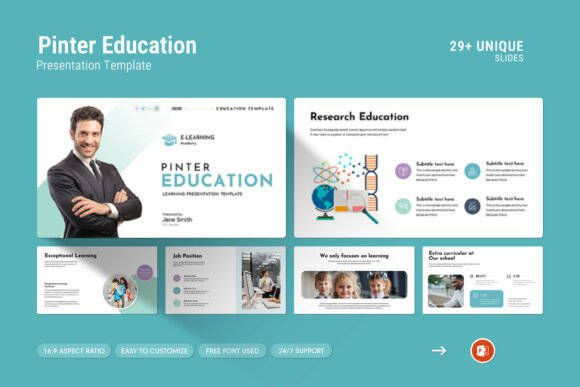
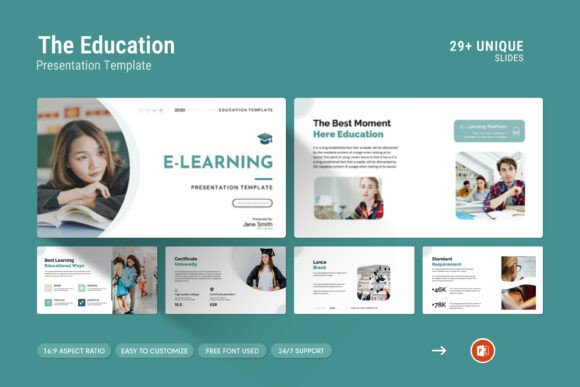
At its core, this template is designed to simplify the process of building a professional slide deck. It includes a PowerPoint .PPTX file and a help file, with 30 slides in total. The design emphasizes a clean, contemporary look with features such as master slide layouts, drag-and-drop image placement, easy color changes, and a 16:9 Full HD ratio (1920x1080px). Vector icons, infographics, tables, and diagrams are built into the template, reducing the time you would otherwise spend creating these elements from scratch.
What makes this template distinct is its balance between simplicity and visual richness. It avoids the overly minimalist approach that can feel generic, while also steering clear of the cluttered, heavy designs that distract from content. The inclusion of photo layouts and infographics means you can present data and concepts without needing advanced design skills. The template works on both Apple and Windows platforms, and it uses free fonts, which removes concerns about licensing or compatibility issues.
Comparing the Template with Other Presentation Approaches
When evaluating presentation options, you are likely considering several paths: building a deck entirely from scratch, using a basic built-in PowerPoint theme, or purchasing a premium template. Each approach carries its own tradeoffs.
Building from Scratch vs. Using a Template
Starting with a blank slide gives you total creative freedom, but it also demands significant time and design expertise. You must decide on color palettes, font pairings, icon sets, slide transitions, and layout consistency across all slides. For most educators and professionals, this level of effort is not sustainable, especially when the focus should be on content quality rather than slide decoration. The Education PowerPoint Presentation Template eliminates much of this upfront work by providing a coherent visual system. You can focus on refining your message rather than formatting each slide individually.
On the other hand, building from scratch may be preferable if your presentation requires a highly unconventional structure or a very specific visual identity that a template cannot accommodate. For example, if you are presenting a highly interactive workshop with non-linear navigation or embedded custom media, a blank canvas may serve you better. However, for the vast majority of academic presentations, a template provides a strong foundation.
Basic Built-in Themes vs. Premium Templates
PowerPoint and other presentation software include default themes, but these are often overused and can make your work look generic. A built-in theme may save time initially, but it may not include the infographics, vector icons, or diagram layouts that the Education PowerPoint Presentation Template provides. You would need to source or create these assets separately, which adds time and complexity.
Premium templates like this one offer a more cohesive visual language. The master slide layout feature ensures that changes you make are applied consistently across all slides, which is especially valuable when multiple people are collaborating on a deck. The drag-and-drop image feature also streamlines the process of incorporating visuals, reducing the friction that often comes with aligning and resizing images manually.
That said, a premium template is an investment. If you only need a single, simple presentation and have no plans to reuse the design, the cost and time to learn the template may not be justified. For frequent presenters, however, the reusable nature of the template makes it a practical resource.
Strengths and Best-Fit Situations
The Education PowerPoint Presentation Template excels in scenarios where professionalism and clarity are paramount. Consider the following use cases:
- Academic conferences and symposiums: The clean layout and data-friendly infographics help you present research findings without visual noise. The 16:9 Full HD ratio ensures your slides display well on modern projectors and screens.
- Classroom lectures and course materials: Educators can create consistent, visually engaging slides for weekly lessons. The template's vector icons and diagrams make it easier to explain complex concepts.
- Institutional reports and proposals: Administrators can use the template for accreditation reports, budget presentations, or strategic plans. The professional appearance lends credibility to the content.
- Student capstone projects and thesis defenses: Students can present their work with a level of polish that matches the expectations of academic committees. The template helps them demonstrate attention to detail and organizational skills.
One of the template's strongest features is its ease of color change. This allows you to align the presentation with your institution's branding or your personal preferences without starting over. The support from the template designer is another practical advantage. If you encounter issues or need guidance, real support from a skilled designer is available, which is not something you get with free themes or self-built decks.
Limitations and When to Consider Alternatives
No single template works perfectly for every scenario, and the Education PowerPoint Presentation Template has limitations worth considering.
Learning curve for new users: While the template is designed to be user-friendly, anyone new to working with master slides or layered elements may need some time to get comfortable. The included help file mitigates this, but if you are under a tight deadline, you may find it easier to use a simpler, built-in theme. If you rarely create presentations, the upfront effort to learn the template may not be worthwhile.
Customization boundaries: Although the template offers color changes and drag-and-drop images, its structure is still a predefined framework. If your presentation requires a very unique layout, custom animations, or non-standard slide dimensions, you may find the template limiting. In such cases, building from scratch or using a more flexible design tool might be a better fit.
File format considerations: The template is provided as a PowerPoint .PPTX file. While PowerPoint remains the dominant presentation tool, some users work with Google Slides, Keynote, or other software. The template is optimized for PowerPoint, and while you can import it into other applications, some features may not transfer perfectly. If your team or institution relies on a different platform, you may need to evaluate how well the template integrates with your workflow before purchasing.
Slide count and scope: With 30 slides, the template covers a typical presentation length well. However, if you need a very short deck (5-10 slides) or a very long one (50+ slides), the template's structure may feel either too sparse or too repetitive. You can certainly add or remove slides, but the design is most effective within its intended range.
Decision Factors: How to Choose the Right Approach
When deciding whether the Education PowerPoint Presentation Template is the right choice for your situation, consider the following factors:
- Frequency of presentations: If you present regularly, the template offers excellent value because you can reuse and adapt it multiple times. If you present rarely, a simpler option may suffice.
- Importance of visual polish: For high-stakes presentations where first impressions matter, the professional design adds credibility. For informal internal updates, visual polish may be less critical.
- Time available for design: The template saves significant time compared to building from scratch. If you have very little time and need a decent-looking deck quickly, this template is a strong choice.
- Need for data visualization: If your presentation includes charts, graphs, or other data, the infographics and diagram features make the template especially useful. If your presentation is mostly text or images, the advantage is less pronounced.
- Collaboration requirements: If multiple people are contributing slides, the master slide layout ensures consistency across contributions. This is a major benefit for team projects.
- Technical comfort: If you are comfortable learning new features in PowerPoint, the template is straightforward. If you prefer minimal interaction with design tools, a basic theme may be less frustrating.
Practical Example: Comparing Two Approaches
Imagine you are a graduate student preparing a thesis defense presentation. You have two weeks before your defense, and your committee expects a clear, well-organized presentation of your research.
Option A: Using the Education PowerPoint Presentation Template
You download the template, read the help file, and begin adapting the slides. You change the color scheme to match your university branding. You use the infographic slide to present your methodology timeline and the diagram slide to illustrate your theoretical framework. The drag-and-drop feature lets you add your research images quickly. Within a few days, you have a consistent, professional deck. You spend the remaining time rehearsing your delivery and refining your talking points.
Option B: Building from scratch
You start with a blank slide and choose a color palette. You create your own timeline graphic using basic shapes, which takes several hours. You search for free vector icons to represent key concepts, but many are inconsistent in style. You spend extra time aligning text boxes and images across slides. While the final deck is original, the process consumed more time than expected, leaving less time for practice and polish.
In this scenario, the template accelerates the design process and produces a result that is at least as professional as a custom-built deck. The only tradeoff is that the template imposes a certain look, which may not feel as personal. For most students, the time savings outweigh this concern.
Making an Informed Decision
The Education PowerPoint Presentation Template is a practical tool for anyone who needs to produce clean, professional academic presentations efficiently. Its strengths lie in its balanced design, built-in visual assets, and ease of use for frequent presenters. However, it is not a one-size-fits-all solution. If your needs are highly specific, your platform is not PowerPoint, or you present very rarely, you may find better value in other approaches.
When evaluating the template, consider your own workflow, the expectations of your audience, and the time you are willing to invest in design. The best choice is the one that allows you to focus on your content and deliver your message with clarity and confidence. By understanding what this template offers and where its limitations lie, you can decide whether it aligns with your priorities and helps you achieve your presentation goals.