How to Choose the Right Medicine PowerPoint Presentation Template for Your Professional Work
Presenting medical research, clinical data, or healthcare services demands more than just accurate information—it requires clarity, structure, and visual polish. A Medicine PowerPoint Presentation Template is designed to meet these needs, offering a clean, contemporary layout that helps professionals communicate complex topics without visual clutter. But with many presentation formats available, how do you know whether this type of template fits your specific project? This article breaks down what makes this template distinct, where it excels, and when you might need a different approach.
What Defines a Medicine PowerPoint Presentation Template
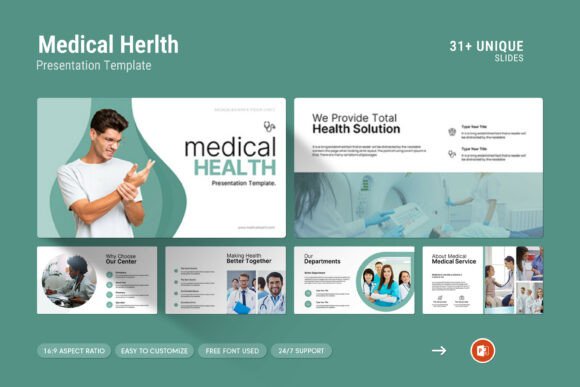
A Medicine PowerPoint Presentation Template typically combines professional slide layouts with features tailored for healthcare and scientific content. The one described here includes 31 slides, master slide layouts, drag-and-drop image placement, vector icons, infographics, tables, and diagrams. It works on both Apple and Windows systems, comes in 16:9 Full HD ratio, and uses free fonts. The design is simple yet powerful, aiming to present work and company profiles at a higher level.
What makes this template distinct is its balance between flexibility and structure. The master slides let you maintain consistent formatting across your entire presentation, while the drag-and-drop feature allows quick image replacement without breaking the design. The inclusion of infographics and diagrams is particularly valuable for medical content, where data visualization often determines how well your audience understands key points.
For professionals preparing clinical study results, hospital service overviews, or academic lectures, this template provides a ready-made framework. You are not starting from a blank slide—you are building within a system that already considers spacing, color harmony, and visual hierarchy.
Comparing Template Styles: What Fits Your Content
Not all presentation templates serve the same purpose. A Medicine PowerPoint Presentation Template sits in a middle ground between minimalist decks and heavily branded corporate templates. It offers more visual structure than a plain white background but avoids the busy, branded look that can distract from scientific content.
If your presentation needs to convey authority and precision—such as presenting clinical trial phases, epidemiological data, or treatment protocols—this template's clean infographics and tables support that goal. The vector icons allow you to illustrate concepts like organs, medical instruments, or patient flow without needing custom illustrations.
On the other hand, if your presentation is highly exploratory, such as brainstorming new research directions or facilitating a workshop discussion, a more flexible, less structured template may serve you better. The Medicine PowerPoint Presentation Template assumes you have key content ready to insert into predefined layouts. For free-form sessions, you might prefer a blank canvas or a template with fewer pre-built slides.
Similarly, if your organization requires strict adherence to brand colors, fonts, and logo placement, you may need to modify this template's color scheme. The template allows easy color changes, but the default palette is designed for general medical use. Customizing it to match your institution's branding is straightforward, but it does require some effort.
Strengths That Matter for Medical Presentations
One of the strongest arguments for using a Medicine PowerPoint Presentation Template is the time it saves. Instead of designing each slide from scratch, you focus on content while the template handles layout. For busy clinicians, researchers, or healthcare administrators, this efficiency is valuable.
The template's 31 slides cover a range of common presentation needs: title slides, agenda overviews, data charts, comparison tables, photo layouts, and closing slides. This variety means you can assemble a complete presentation without hunting for additional slide types. The drag-and-drop image feature is especially practical when you need to update photos of medical equipment, team members, or treatment facilities.
Another strength is compatibility. The template works on both Apple and Windows platforms and includes a Google Slides .PPTX file. This cross-platform support matters when different team members use different operating systems. You can collaborate without worrying about formatting issues.
The free font requirement is also a practical advantage. Many premium templates rely on paid fonts that need separate installation. With this template, you can start working immediately without additional font purchases. The included help file guides you through any setup questions.
Tradeoffs and Limitations to Consider
No template is perfect for every situation. The Medicine PowerPoint Presentation Template has several tradeoffs worth understanding before you commit.
First, the template's design is intentionally simple. If you are presenting to a highly design-conscious audience—such as a marketing team launching a new healthcare product—you might find the template too understated. In that case, a more visually bold or branded template could create a stronger first impression.
Second, while the template includes infographics and diagrams, these are generic medical icons and layouts. They are not specific to your topic. For example, if you present data on a rare disease, you may need to customize the icons or create new diagrams from scratch. The template gives you a starting point, but you still need to tailor the visuals to your exact content.
Third, the template's 31 slides are fixed in number. If your presentation needs to be very short (e.g., 5 slides for a quick update) or very long (e.g., 50 slides for a comprehensive report), you will need to adapt by removing or duplicating slides. The master slide layout helps maintain consistency, but the template structure works best for medium-length presentations.
Fourth, the template relies on free fonts. While this is convenient, free fonts sometimes lack the full character set needed for specialized medical terms, especially if you use Greek letters, subscripts, or unusual symbols. Check that the free fonts you choose support your specific content before finalizing your presentation.
When This Template Is the Right Choice
The Medicine PowerPoint Presentation Template fits well in several common scenarios:
- Academic medical lectures: Professors and residents presenting case studies, research findings, or journal clubs benefit from the clean layout and infographic support.
- Clinical data reviews: When presenting patient outcomes, treatment comparisons, or quality metrics, the tables and diagrams help audiences grasp numbers quickly.
- Healthcare service overviews: Hospitals, clinics, and medical groups introducing their facilities, team, or services can use the photo layouts and icon-based slides.
- Pharmaceutical or device presentations: Representatives who need to explain product features, clinical evidence, or usage protocols will find the structured slides helpful.
- Conference presentations: The 16:9 Full HD ratio ensures your slides display properly on modern screens and projectors.
In these contexts, the template's balance of professionalism and simplicity works in your favor. Your audience focuses on your message, not on distracting design elements.
When You May Need Another Option
There are also situations where a different template or approach makes more sense:
- Highly branded corporate decks: If your organization mandates exact brand colors, logos, and typography, you may need a custom template built around those guidelines.
- Interactive or non-linear presentations: If you use Prezi, Canva, or other platforms with zoom or motion features, a linear PowerPoint template may feel limiting.
- Video or multimedia-heavy presentations: If your content relies heavily on embedded video, animations, or interactive elements, you need a template designed for rich media integration.
- Very short or very long decks: For a 3-slide executive summary or a 100-slide regulatory submission, the pre-built slide variety may not align with your needs.
- Design-forward audiences: If you present to marketing, advertising, or creative healthcare teams, you might want a more visually distinctive template.
Understanding these boundaries helps you choose the right tool. The Medicine PowerPoint Presentation Template is a practical, efficient solution for routine medical presentations. For specialized or highly customized needs, explore other formats.
Decision Factors to Guide Your Choice
When evaluating whether this template is right for you, consider these factors:
- Content volume: How many slides do you need? The 31-slide set works well for standard presentations. If you need significantly more or fewer slides, assess how easily you can adapt the template.
- Visual complexity: Does your data require custom diagrams, anatomical illustrations, or complex flowcharts? The template includes basic infographics, but advanced visuals may need outside creation.
- Collaboration needs: Will multiple people edit the presentation? The master slide layout and cross-platform support make teamwork easier.
- Brand requirements: How strictly must you follow brand guidelines? The template allows color changes, but you need to invest time in customization.
- Audience expectations: What level of design polish does your audience expect? This template offers a clean, professional look that suits most medical audiences.
- Time constraints: How much time do you have to prepare? The template's drag-and-drop features and pre-built slides speed up creation significantly.
Answering these questions will tell you whether the Medicine PowerPoint Presentation Template aligns with your project's demands. If it does, you can move forward with confidence. If not, you have clarity on what to look for in an alternative.
Practical Example: Using the Template for a Clinical Study Presentation
Imagine you are a clinical researcher presenting results from a Phase 2 trial. Your presentation needs to cover: study objectives, patient demographics, efficacy outcomes, safety data, and conclusions. With the Medicine PowerPoint Presentation Template, you can use:
- A title slide with the study name and your institution.
- An agenda slide mapping the presentation flow.
- A demographics table comparing treatment and control groups.
- Infographic icons to illustrate study design (randomization, blinding, treatment duration).
- Diagram slides to show efficacy results (bar charts, Kaplan-Meier curves).
- A safety data table listing adverse events by severity.
- A conclusion slide summarizing key takeaways.
The template's visual consistency helps your audience follow the narrative across 15–20 slides. You spend your time refining the data and message, not adjusting alignment or color schemes. The result is a professional, credible presentation that communicates your findings clearly.
Making an Informed Decision
Choosing a presentation template is a practical decision, not a creative one. Your goal is to communicate effectively with your audience. The Medicine PowerPoint Presentation Template offers a solid foundation for many medical and healthcare presentations, but it is not a one-size-fits-all solution.
Evaluate your content, your audience, your brand requirements, and your time constraints. If the template's strengths match your needs, it can save you hours of design work and help you deliver a polished presentation. If your needs fall outside its design scope, you will be better served by a different format.
The support provided by the template's designer is also worth noting. If you encounter issues or have questions, you can contact a skilled designer directly. This kind of real support adds value, especially if you are not a design expert yourself.
Ultimately, the best template is the one that lets your content shine. Whether that is this Medicine PowerPoint Presentation Template or another option depends on your specific situation. By understanding what this template offers and where its limits lie, you can make a choice that supports your work and your audience's understanding.