Gothic Cathedral Facade Trio: A Design Resource for Timeless Architecture
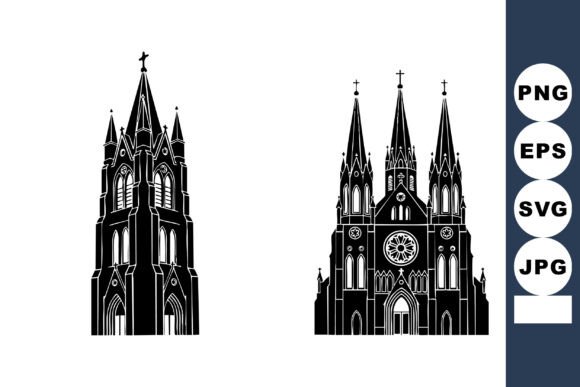
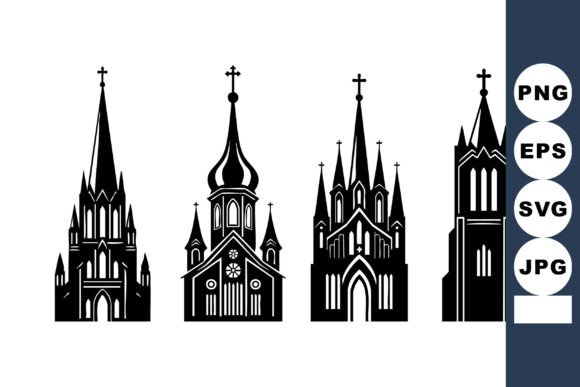
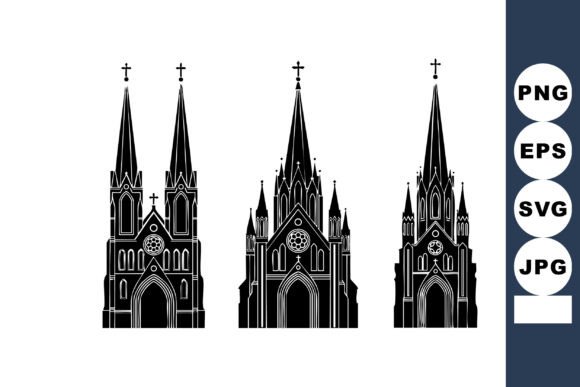
Few architectural styles command the same sense of awe and reverence as Gothic cathedral design. The soaring spires, intricate rose windows, and dramatic facade compositions have inspired artists, architects, and designers for centuries. Today, a digital asset known as the Gothic Cathedral Facade Trio brings this timeless aesthetic into modern creative workflows. This collection presents three distinct cathedral silhouettes in a clean flat vector style, each emphasizing different facade variations, ornate rose windows, and tall spires crowned with crosses. Whether you are a graphic designer working on branding, an editor assembling a layout, or an educator crafting infographics, this resource offers a solemn yet striking visual language rooted in centuries of architectural mastery.
Understanding the Visual Language of Gothic Facades
Gothic architecture emerged in the 12th century and flourished across Europe for over 400 years. Its hallmark features include pointed arches, ribbed vaults, flying buttresses, and, most notably, elaborate facades that function as narrative canvases. The facade of a Gothic cathedral is not merely an entrance; it is a theological statement, a civic symbol, and a work of art. The trio of cathedral silhouettes captures this essence by presenting variations on the classic facade composition. Each silhouette highlights the vertical thrust that defines Gothic design, drawing the eye upward toward heaven.
The rose window, a circular stained-glass masterpiece, sits at the center of many Gothic facades. In the vector trio, these windows appear as simplified geometric patterns that retain the complexity of the originals. The tall spires, often the tallest structures in medieval cities, rise with clean lines and terminate in crosses, reinforcing the spiritual and aspirational nature of the buildings. The flat vector style strips away extraneous detail while preserving the essential proportions and symbolic weight of the architecture.
This approach makes the Gothic Cathedral Facade Trio particularly valuable for projects where clarity and impact matter more than photorealism. The silhouettes communicate the grandeur of Gothic design without overwhelming the viewer with unnecessary complexity.
Why Flat Vector Style Works for Architectural Representations
Flat vector graphics have become a dominant visual style in contemporary design. Their clean lines, uniform colors, and lack of gradients or textures make them ideal for logos, infographics, and editorial layouts. When applied to Gothic cathedral facades, this style achieves several important objectives.
First, it ensures scalability. Vector files, whether in SVG or EPS format, can be resized from a business card to a billboard without any loss of quality. The Gothic Cathedral Facade Trio includes both SVG and EPS files, giving designers full control over scaling in vector editing software. The JPG and PNG raster files provide immediate use for web and print applications where vector editing is not required.
Second, flat vectors improve readability. Architectural details that might become muddy in a photograph or complex illustration remain crisp and distinct. The rose windows, for instance, are rendered as clear circular patterns that read instantly as Gothic features. The spires maintain their sharp upward trajectory, and the crosses at their peaks are unmistakable.
Third, the flat style enhances versatility. Because the silhouettes are abstracted from photographic reality, they integrate easily into diverse design contexts. A minimalist brand identity, a historical infographic, or a solemn editorial spread can all accommodate these vector forms without stylistic conflict.
Practical Applications Across Industries
The trio of cathedral silhouettes is not merely a decorative asset; it serves functional roles in multiple professional fields.
Branding and Logo Design
Businesses in heritage tourism, religious publishing, architectural services, or luxury goods often seek visual symbols that convey tradition, stability, and craftsmanship. A single cathedral silhouette from the trio can anchor a logo, while the full set might appear in a brand pattern or secondary mark. The crosses on the spires add a layer of meaning appropriate for faith-based organizations or institutions with historic affiliations.
I have seen designers use one facade variation as a primary logo element and rotate among the three for sub-brands or seasonal campaigns. The consistency of the flat vector style ensures that all variations feel like part of the same family, even as the facade details differ.
Infographics and Educational Materials
When explaining Gothic architecture to students or the general public, visual aids must balance accuracy with simplicity. The Gothic Cathedral Facade Trio functions as an excellent teaching tool. Each silhouette can be labeled to identify features such as the rose window, the central portal, the twin towers, and the spire. Because the files are provided in multiple formats, educators can embed them directly into slides, handouts, or digital publications.
For example, an infographic comparing the facades of Notre-Dame de Paris, Chartres Cathedral, and Reims Cathedral could use the trio as simplified stand-ins, with callouts highlighting each building's unique characteristics. The clean vector style prevents visual clutter while maintaining scholarly credibility.
Editorial and Publishing Layouts
Magazines, books, and online publications covering architecture, history, or travel often require imagery that supports text without dominating it. The solemn tone of these silhouettes makes them ideal for chapter openers, section dividers, or margin decorations. Their vertical orientation complements columnar text layouts, and the three variations provide rhythmic visual interest across multiple pages.
I recommend using the PNG files with transparent backgrounds for quick placement in layout software, while the SVG files allow for color adjustments to match a publication's palette.
Technical Considerations When Choosing File Formats
The downloadable ZIP file includes four formats: SVG, EPS, JPG, and PNG. Each serves different workflow needs.
SVG (Scalable Vector Graphics) is the most flexible format for modern web and app design. It supports CSS styling, animation, and responsive scaling. If you are building a website or digital product, the SVG files allow you to manipulate colors, sizes, and even individual elements programmatically.
EPS (Encapsulated PostScript) remains a standard in professional print design and older vector editing software. Many logo workflows and sign-making processes rely on EPS files for compatibility across platforms.
JPG and PNG are raster formats suitable for immediate use. JPG files offer smaller file sizes for web use where transparency is not required. PNG files support transparency, making them ideal for overlaying silhouettes onto colored backgrounds or photographs.
Having all four formats in one download eliminates the need to convert files or hunt for compatible versions. This convenience is especially valuable when working under tight deadlines.
Color, Mood, and the Role of Solemnity
The solemn quality of these silhouettes deserves special attention. Gothic cathedrals were designed to evoke humility, transcendence, and the divine. The flat vector style amplifies this mood by reducing the architecture to its purest forms. Without the distraction of texture, lighting, or color gradients, the viewer focuses on the structural rhythm, the vertical ascent, and the symbolic details.
In practical terms, solemnity makes this trio suitable for projects where a respectful or meditative tone is required. Memorial publications, historical documentaries, religious materials, and heritage conservation campaigns all benefit from imagery that communicates weight and significance without appearing gloomy.
Designers can further control the mood by selecting background colors. A deep navy or charcoal background emphasizes the spires and crosses, while a muted parchment tone creates an archival, historical feel. The flat vector style responds well to color experimentation because the shapes themselves remain stable and readable.
Recommendations for Effective Use
To get the most out of the Gothic Cathedral Facade Trio, consider the following approaches that I have observed working well in practice.
- Use the trio as a series. When space allows, present all three facades together. The variations in rose window design and spire height create a natural progression that tells a visual story.
- Pair with typography that echoes the Gothic period. A serif typeface with strong vertical emphasis, such as Trajan or Cinzel, complements the architectural forms without competing with them.
- Apply subtle opacity variations. In editorial layouts, using one facade at full opacity as a focal point and the others at reduced opacity as background elements can create depth and hierarchy.
- Consider monochromatic or duotone treatments. Because the vectors are flat, applying a single color or a two-color gradient unifies the trio while allowing each facade to retain its distinct character.
- Test the silhouettes at small sizes. Vector files maintain clarity, but it is worth verifying that the crosses and rose window details remain legible at the intended viewing distance.
Addressing Common Questions Before Downloading
Designers often ask whether the silhouettes are historically accurate representations of specific cathedrals. The answer is that they are inspired by typical Gothic facade compositions rather than exact replicas of any single building. This generality is an advantage because it avoids copyright concerns and allows the images to represent the Gothic style broadly rather than a particular landmark.
Another frequent question concerns customization. Because the files are vectors, you can edit every element. You might adjust the shape of a rose window, add or remove decorative elements, or change the proportions to suit your layout. The flat style makes these modifications straightforward, even for designers with moderate vector editing skills.
Finally, the solemn tone has led some users to ask whether the silhouettes can be adapted for lighter contexts. With careful color selection and pairing with cheerful typography or illustrations, the facades can work in educational or editorial settings that are not strictly solemn. The key is context: the same silhouette that feels monumental on a book cover can feel academic and clear on a classroom poster.
Conclusion without Conclusion
The Gothic Cathedral Facade Trio offers a rare combination of historical resonance and modern design utility. Its three distinct silhouettes capture the essential features of Gothic architecture while adhering to the clean, scalable standards of flat vector graphics. Whether you are developing a brand identity, assembling an educational infographic, or designing an editorial spread, these files provide a versatile and meaningful visual resource. The inclusion of SVG, EPS, JPG, and PNG formats ensures that the trio fits seamlessly into any workflow, from web development to print production. Designers who value clarity, symbolism, and timeless aesthetics will find this collection an enduring addition to their toolkits.